
ENGINEERING PRACTICE
What Does a Reviewer Need to Approve a Design Change?
Explore how AI can help organize changes, potential effects, verification records, and open items into a review package that engineers can check.
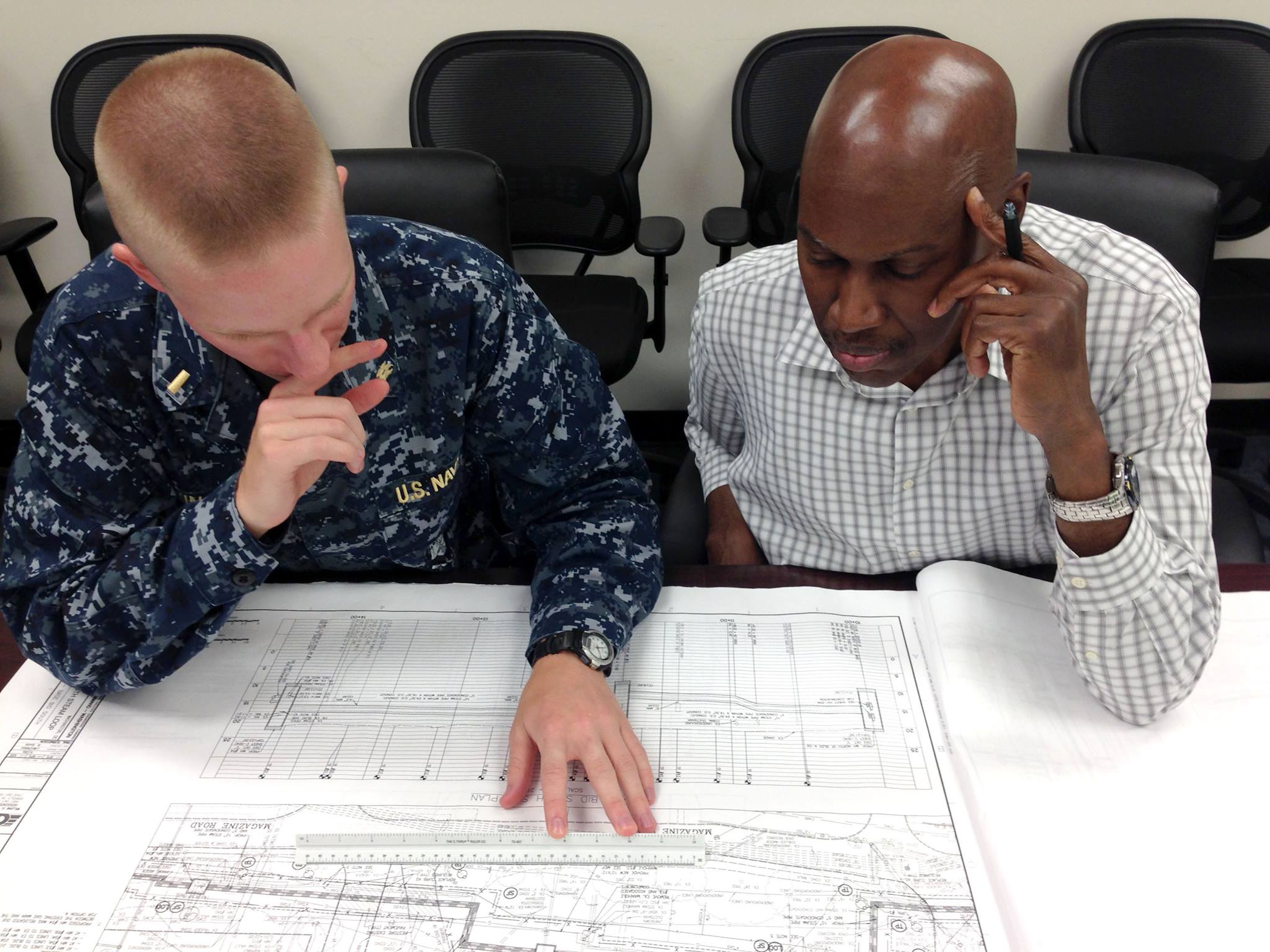
Photo: NAVFAC / U.S. Navy, Engineers Review Drawings for Underground Utilities Project, CC BY 2.0.
The example in this article is a fictional work scenario, not a customer case study.
An engineer receives a revised drawing. The change description reads: “Adjust the bracket hole positions to improve assembly.”
Next, the engineer has to open the previous drawing, locate the corresponding base, check how the parts fit together, and ask more questions: Can the existing fixture still be used? What should happen to parts already in stock? Do the earlier test results still apply?
The drawing has been updated, but the evidence needed for approval may still be scattered across different places. Organizing that information is a concrete task that manufacturing teams can consider asking AI to help with.
What the review package needs to contain
Consider a fictional example: the mounting holes on a fixture bracket have been repositioned. After receiving the new drawing, the reviewer needs the following information:
| Review area | Information to provide |
|---|---|
| Changes | Which part and revision are involved, which features have changed, and why |
| Potential effects | Related bases, assembly components, fixtures, and work instructions, with evidence of those relationships |
| Verification records | Which checks have been completed, which revision was used, and where the results are stored |
| Open items | What information is missing, who is responsible for confirming it, and whether it affects release |
This approach follows the general logic of engineering change management: identify the baseline and assess the change, then approve, implement, and confirm the outcome. Each company can design its process around its products and allocation of responsibilities. Engineering change management reference
Where AI can help organize evidence
Within the capabilities of the available tools and data, AI can help read change requests, organize drawing comparison results, find related documents, and link each conclusion back to its source. For example, a note stating “may affect assembly with the base” should include the corresponding drawing or part relationship so the reviewer can check it directly.
After finding relevant information, the questions it does not answer still need to remain visible.
If only the previous revision’s assembly records are available and assembly verification for the new revision has not been completed, the package should clearly identify that gap. Drawing differences alone also cannot establish that strength, tolerances, or manufacturability meet requirements; those judgments still require the appropriate analysis and verification.
Start by checking a completed change request
This helps the reviewer identify the next step more quickly: obtain missing information, arrange a check, or request a design adjustment. The effectiveness of AI’s organizing work can also be assessed through the time needed to find evidence, the number of requests for additional information, and any omissions.
When starting implementation, a team can select a completed change request, have AI organize the review material, and compare it item by item with the issues that actually affected approval at the time. This can help the team determine which organizing tasks are already reliable and which engineering judgments still require a person.